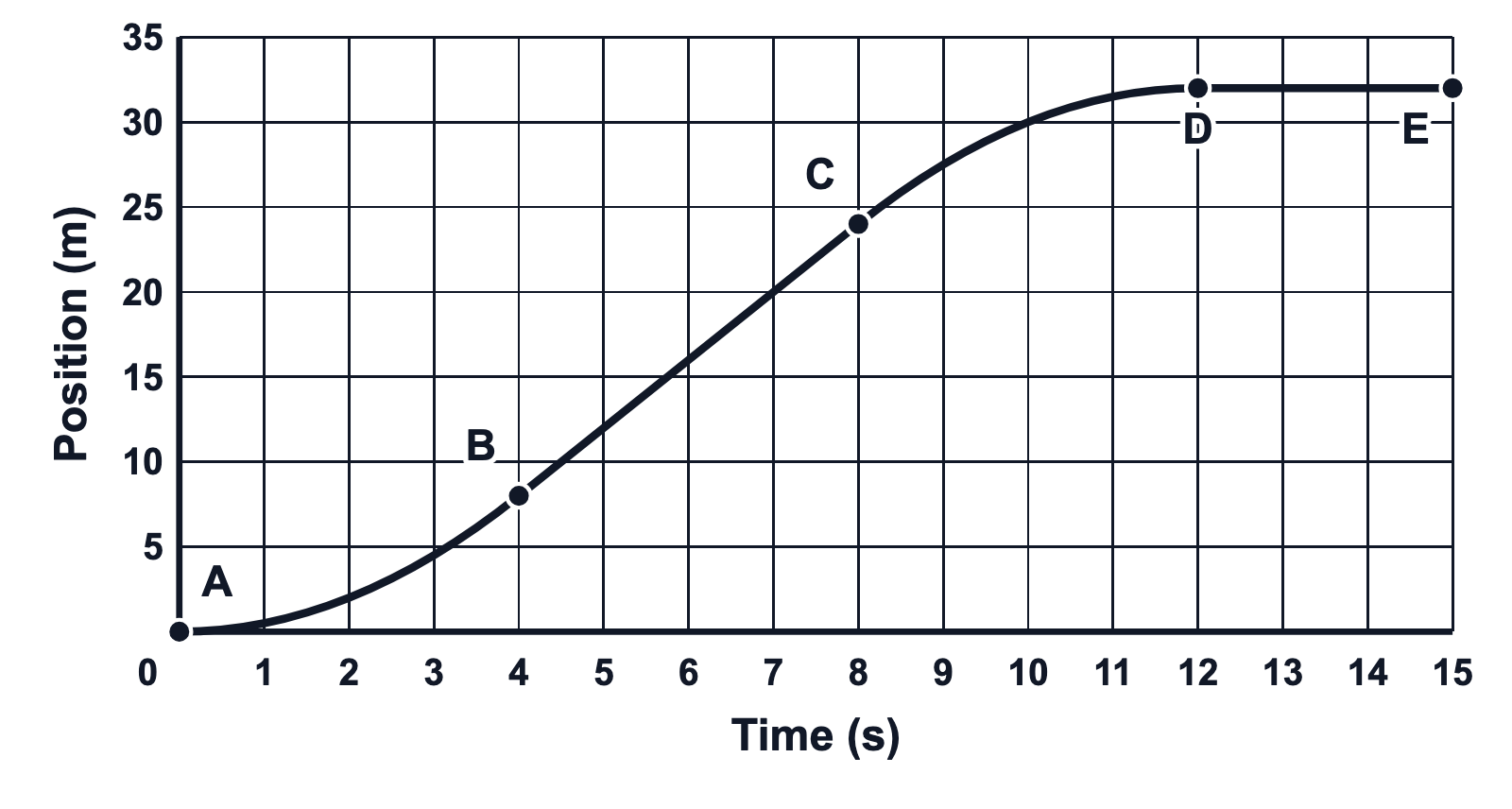
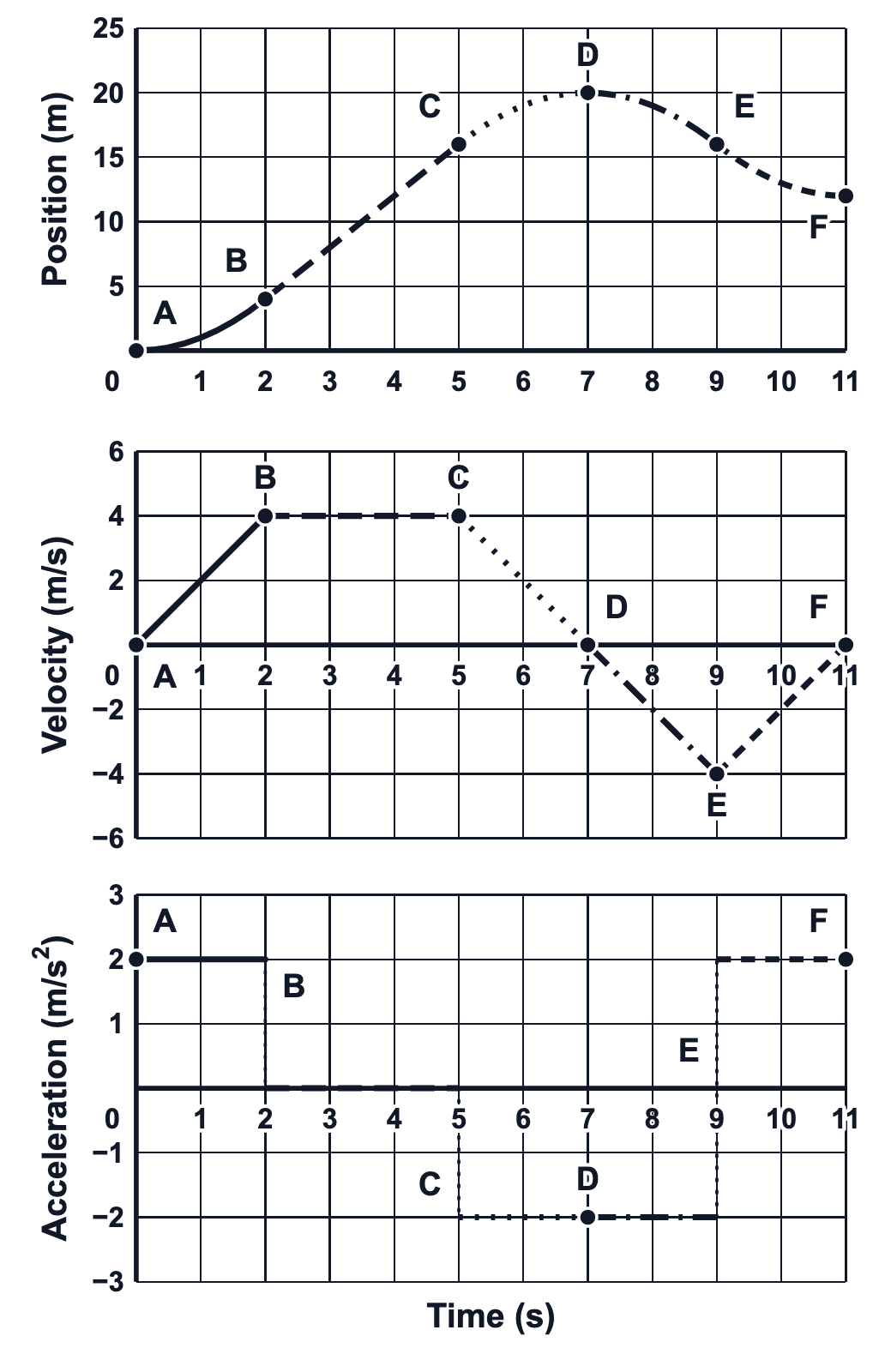
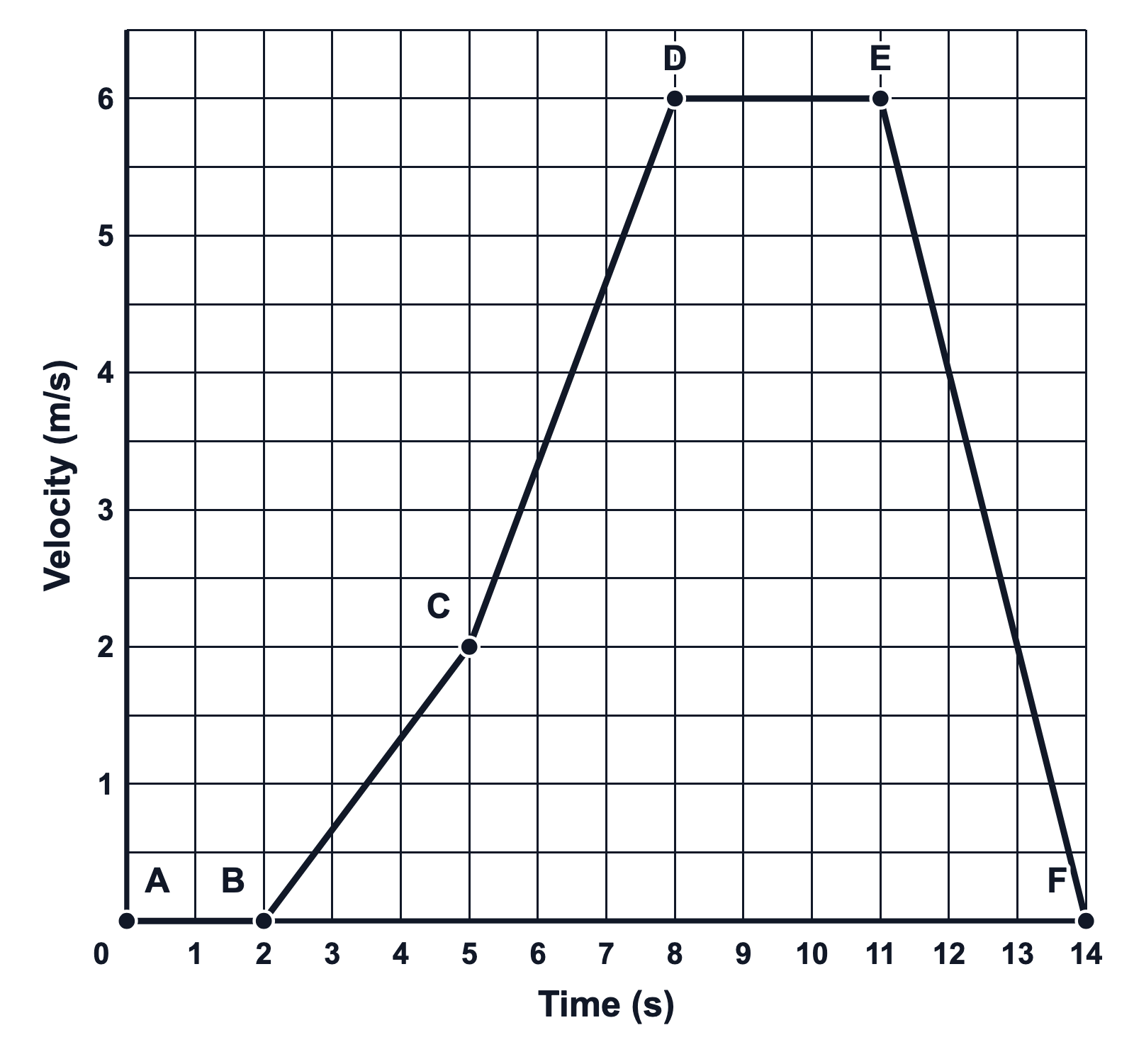
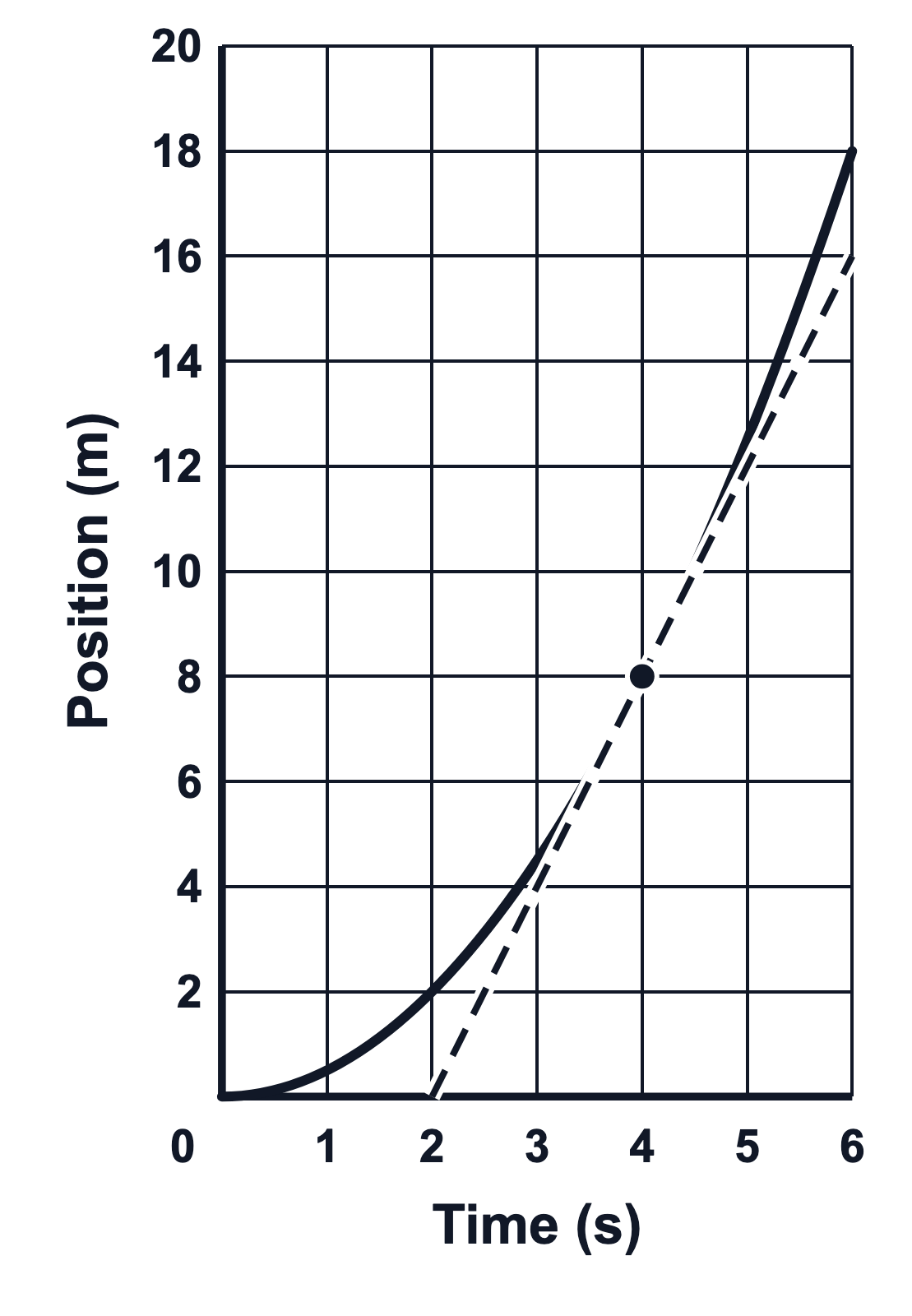
Position–time graph shapes without numbers
An example figure from the Motion Graph Generator.
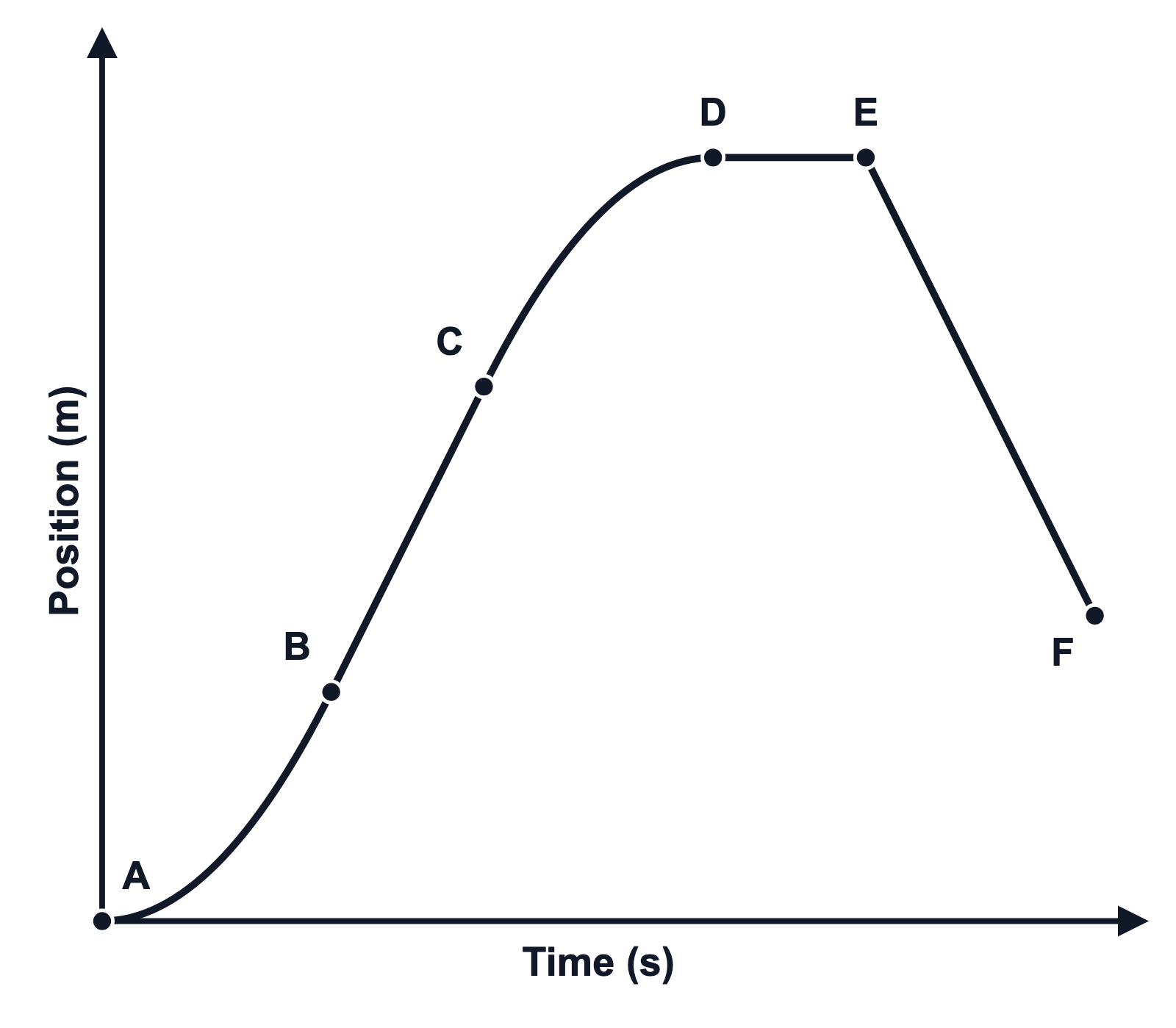
Editing opens it in the Motion Graph Generator with these settings, to change anything and copy or download your own.
Answer key
- A to B (0–3 s): speeding up from 0 to 4 m/s, a = 1.33 m/s²; 0 m to 6 m
- B to C (3–5 s): constant velocity 4 m/s; 6 m to 14 m
- C to D (5–8 s): slowing down from 4 to 0 m/s, a = −1.33 m/s²; 14 m to 20 m
- D to E (8–10 s): at rest; stays at 20 m
- E to F (10–13 s): constant velocity −4 m/s; 20 m to 8 m
Free to use in your tests, worksheets, slides or anything else, no credit needed. Public domain under CC0 1.0. How to reuse our figures