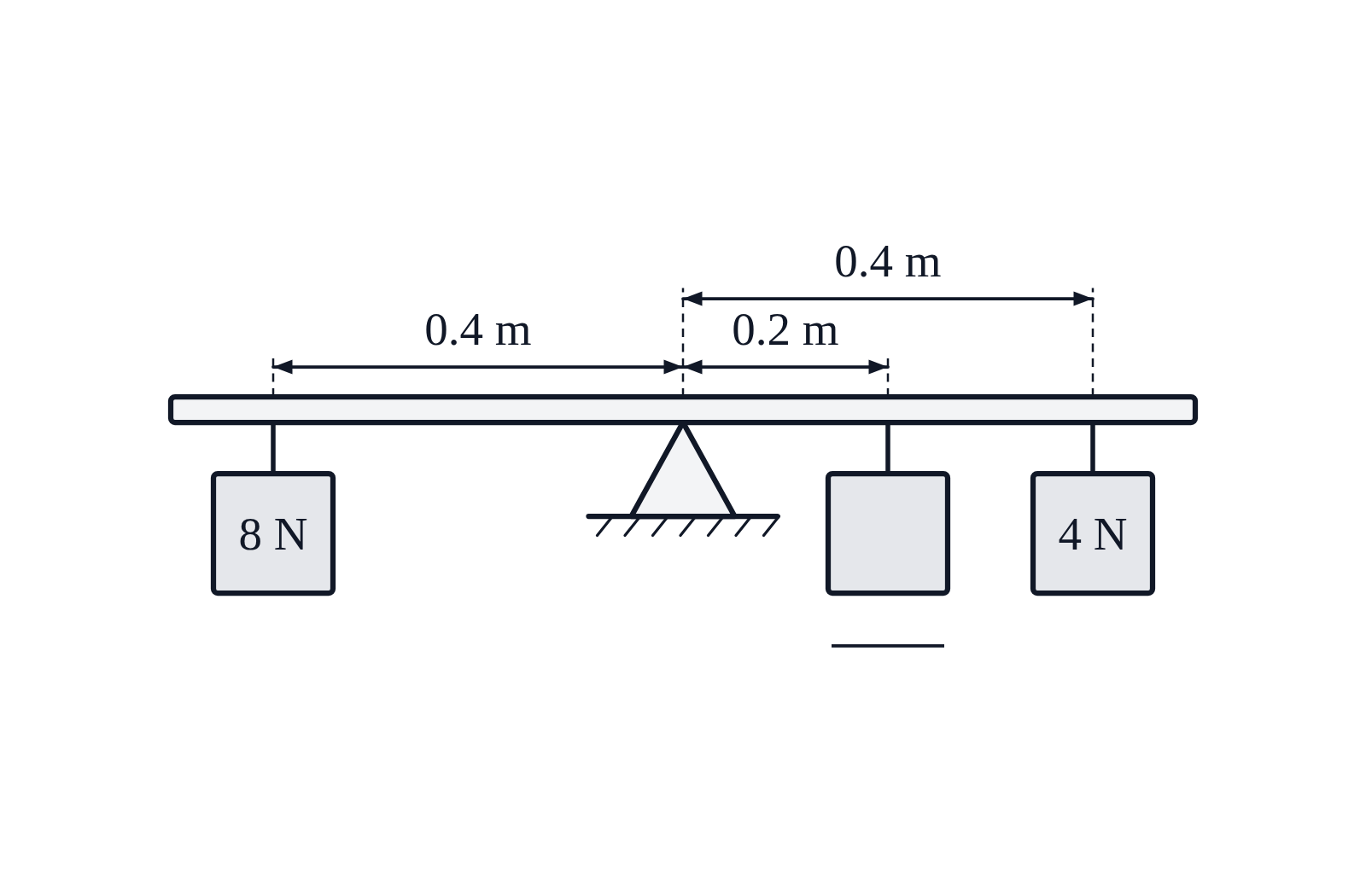
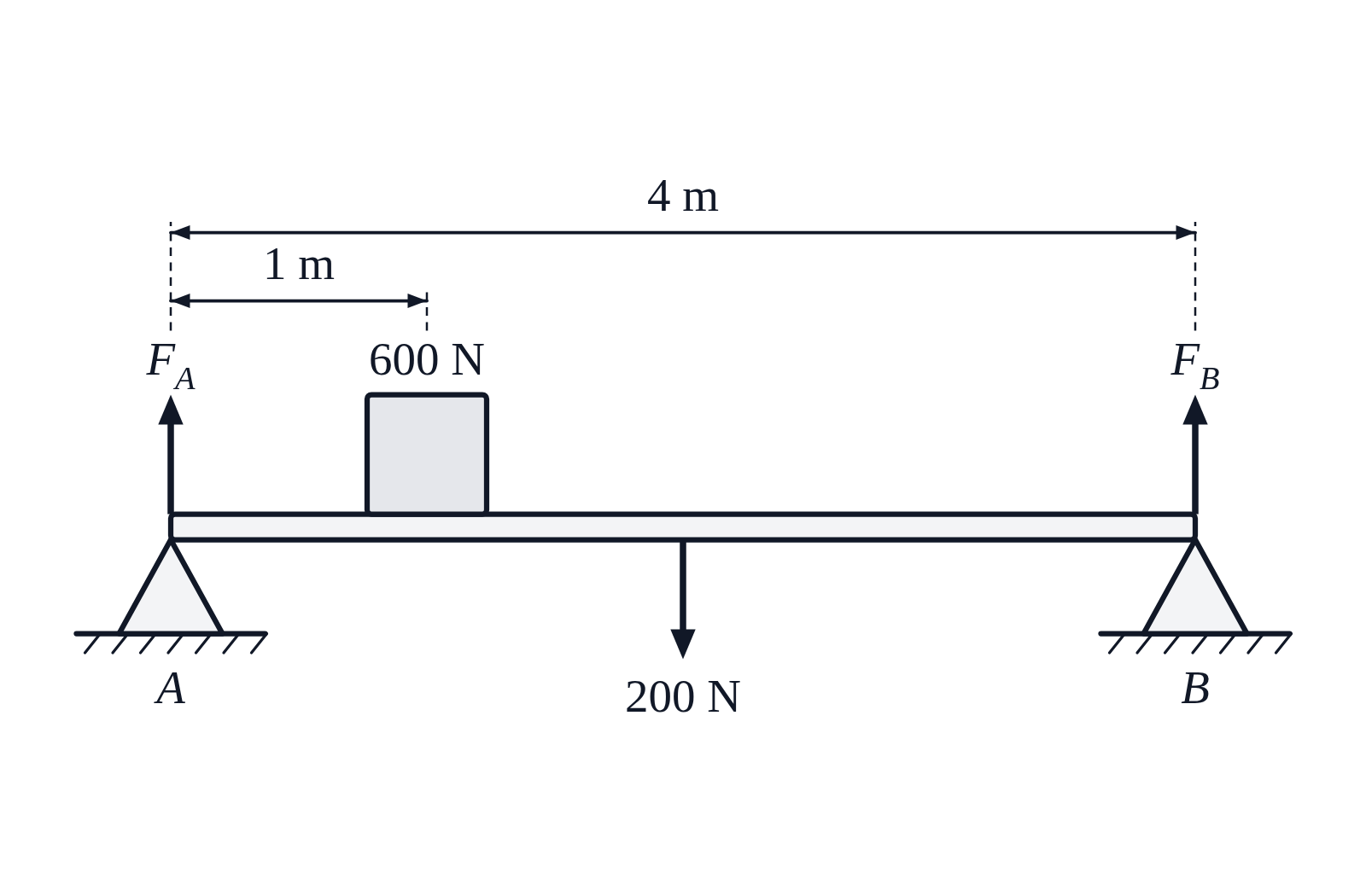
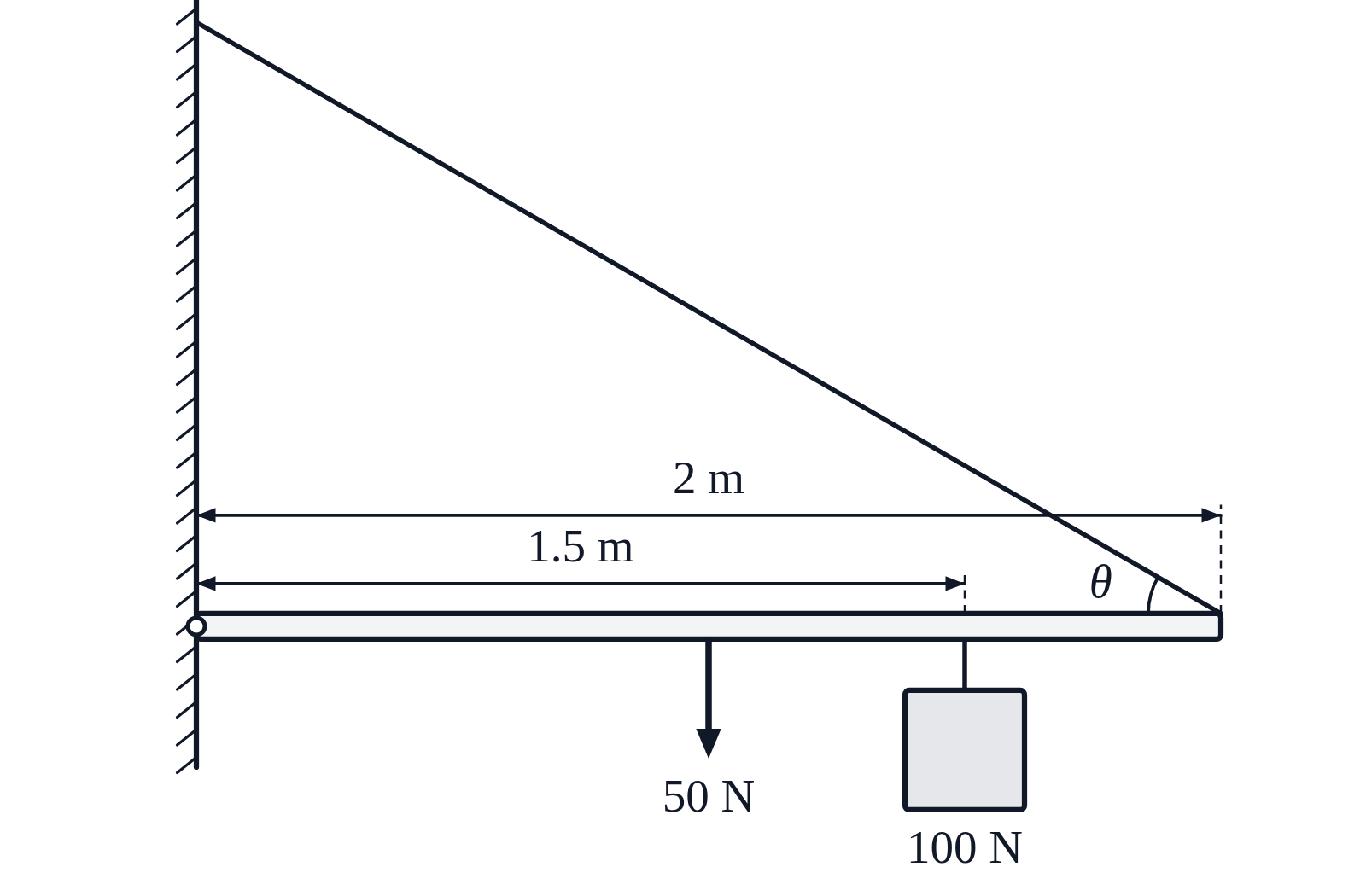
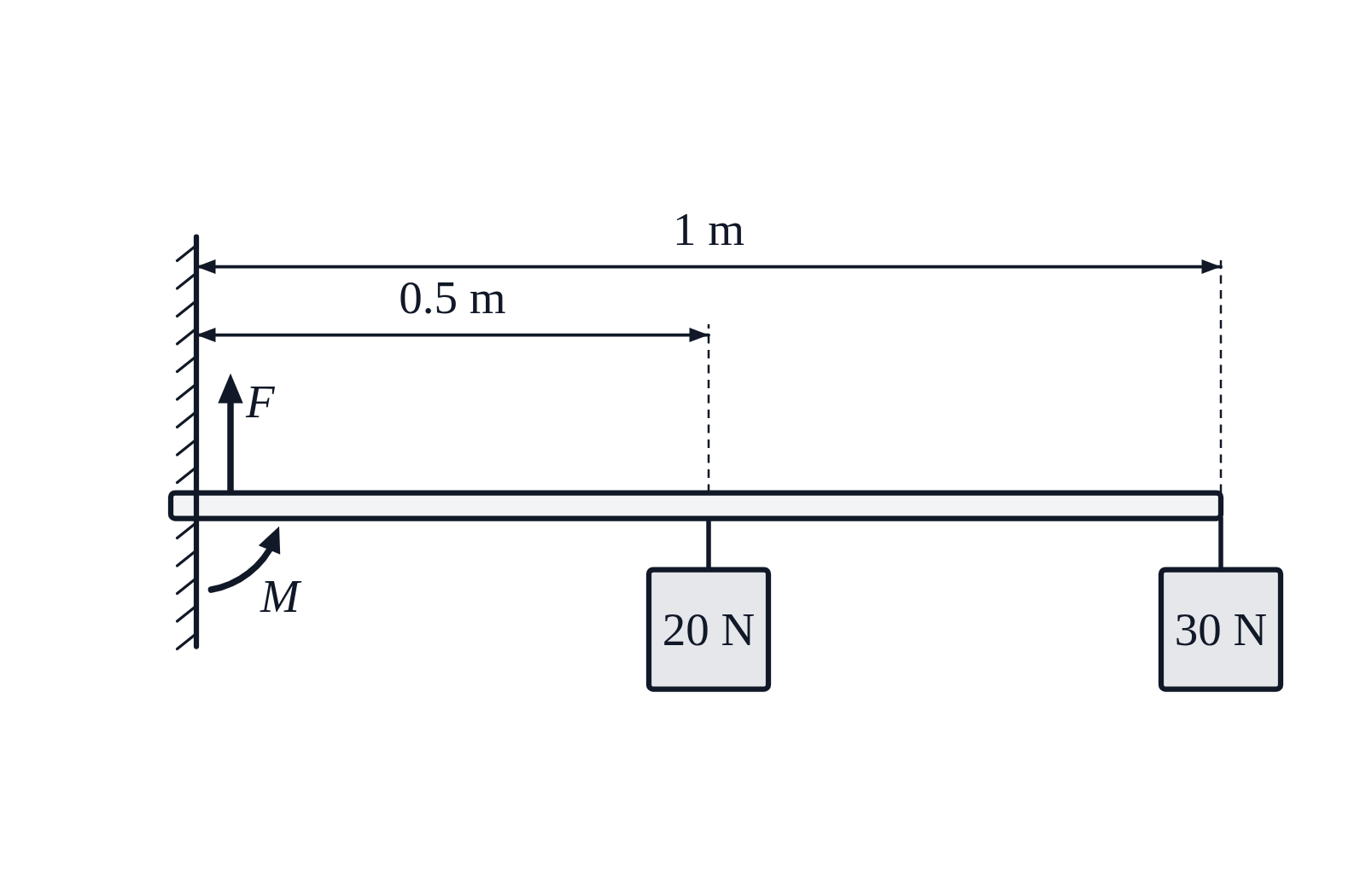
Balanced seesaw with two masses
An example figure from the Torque Generator.
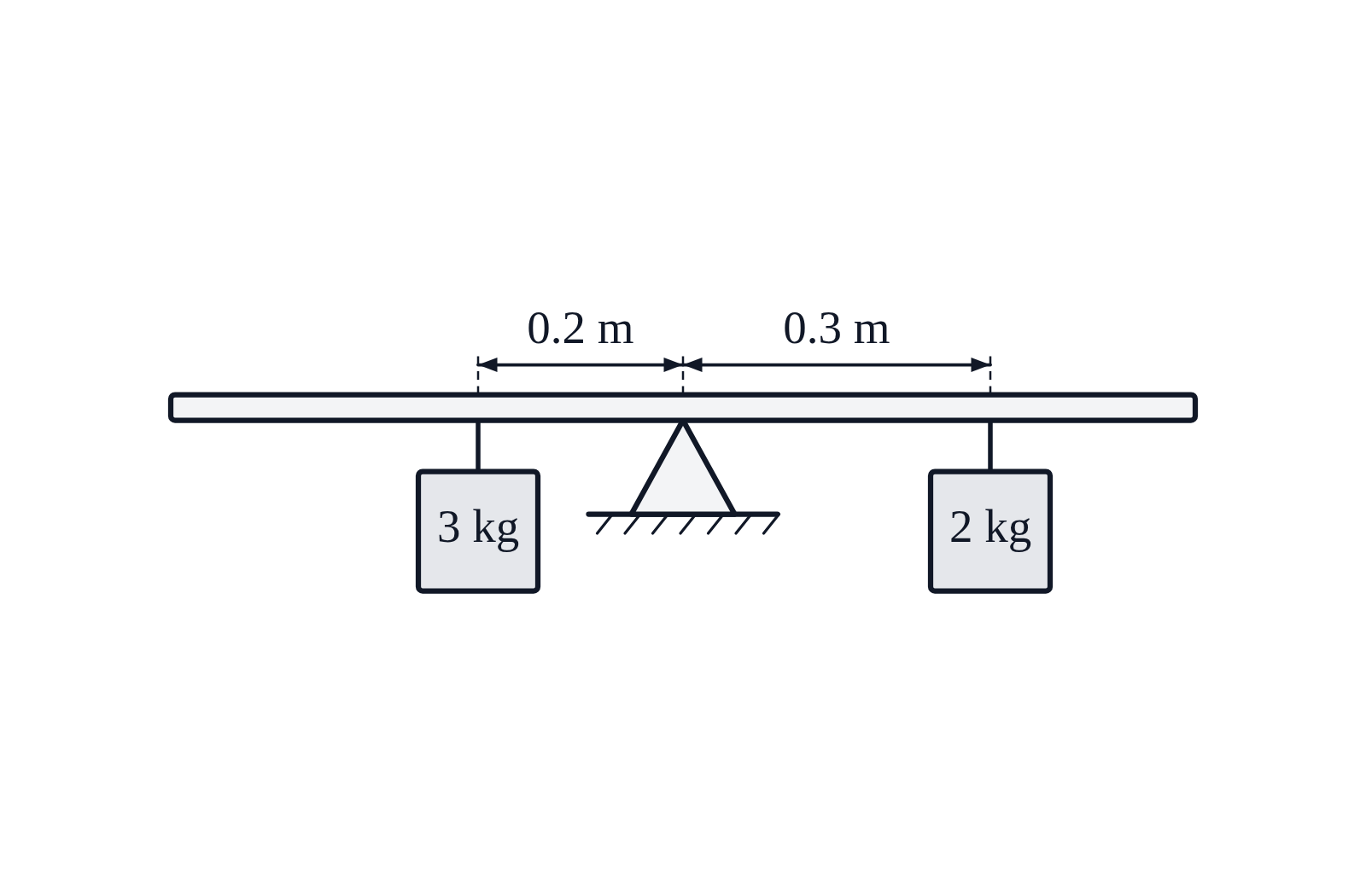
Editing opens it in the Torque Generator with these settings, to change anything and copy or download your own.
Answer key (directions as drawn)
- Weight = mass × g, with g = 9.8 N/kg: Load 1 3 kg → 29.4 N, Load 2 2 kg → 19.6 N
- Load 1: 29.4 N × 0.2 m = 5.88 N·m counterclockwise
- Load 2: 19.6 N × 0.3 m = 5.88 N·m clockwise
- Clockwise 5.88 N·m, counterclockwise 5.88 N·m
- Balanced: the clockwise and counterclockwise torques are equal
- Force at the pivot = 49 N up
Free to use in your tests, worksheets, slides or anything else, no credit needed. Public domain under CC0 1.0. How to reuse our figures